News · Michael Teye Amartey
UESD Nkabom collaborative charts next phase of impact at strategic Koforidua retreat.
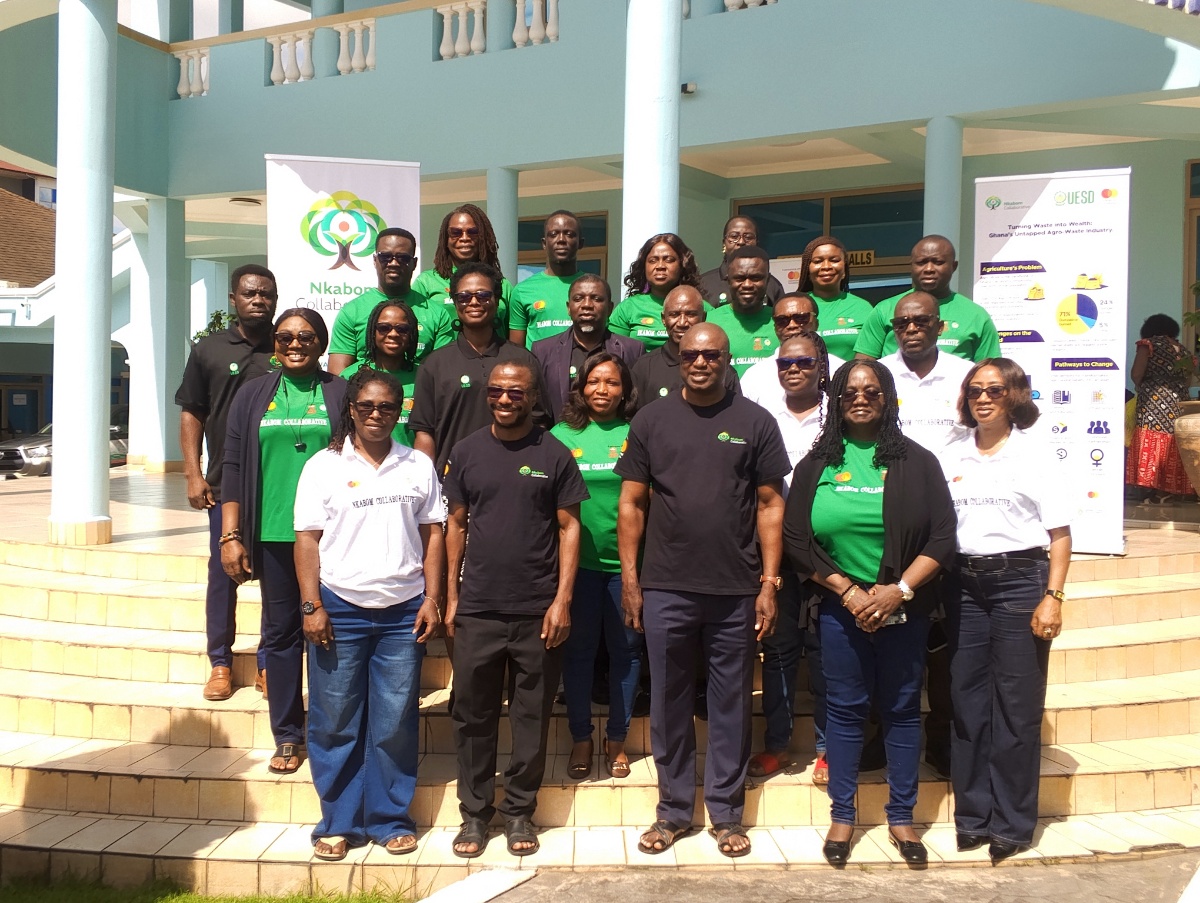
The Nkabom Collaborative, a flagship initiative driven by the University of Environment and Sustainable Development (UESD) , has successfully organized a three-day strategic implementation review aimed at scaling up its environmental and youth employment interventions across Ghana.
The high-level meeting, which brought together members of the Nkabom Project Management Team, academic researchers, and key developmental stakeholders, focused on a comprehensive review of the project’s Year two achievements while mapping out rigorous, results-oriented benchmarks for Year three.
The Nkabom Collaborative , backed by global partnerships with the Mastercard Foundation and McGill University, functions as a multi-institutional coalition.
It unites premier Ghanaian institution including the University of Ghana, Kwame Nkrumah University of Science and Technology, KNUST, and Ashesi University alongside the Association of Ghana Industries, AGI, to address critical shortfalls in youth employment and sustainable agricultural production.
Throughout the intensive three-day retreat, technical experts evaluated ongoing milestones under the project’s main pillars: agro-waste management, aquaculture technology, and green entrepreneurship.
Key discussions centered around expanding local training setups, such as turning organic agricultural waste into high-grade compost and standardizing fish processing technologies to offer secure livelihoods for thousands of Ghanaian youths.
The management team also reviewed its growing engagement with the media, building upon the foundational training workshops conducted for the Eastern Region branch of the Ghana Journalists Association,GJA
Stakeholders reiterated that equipping journalists with the expertise to report accurately on the circular economy and green innovations remains central to mobilizing public support and steering policy reform.
Addressing the delegates during the closing session, the Vice-Chancellor of UESD and Principal Investigator for the project, Prof. Eric Nyarko-Sampson, challenged the implementation team to look beyond administrative checklists.
He emphasized that the survival and success of green innovations rely entirely on real-world outcomes.
Prof. Nyarko-Sampson urged the stakeholders to move beyond counting activities and focus on measurable impact, underlining the collaborative's responsibility to deliver tangible change to local ecosystems and economies.

As the retreat wrapped up, project coordinators expressed confidence in the restructured Year three roadmap. With refined monitoring and evaluation mechanisms now in place, the UESD-led collaborative is moving forward with a renewed focus on transforming rural enterprises and securing green jobs for the next generation of African innovators.